

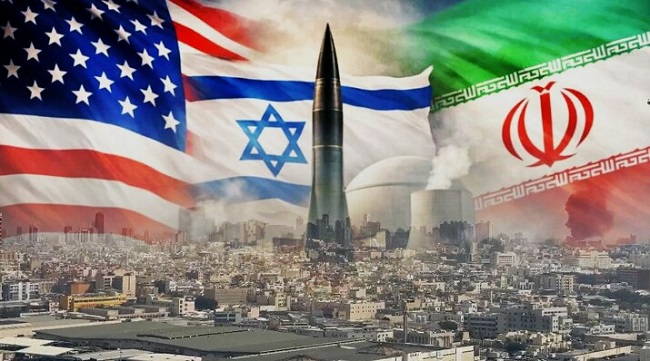
Fire in the Middle East, Tremors in Southeast Asia: Reading the US–Israel vs Iran Conflict through Conflict Theory, International Law, and Geopolitics
Oleh Agus Suryantoro
SINCE the military strike on February 28, 2026 involving the United States and Israel against Iran, the world has once again entered a period of high tension reminiscent of the most volatile moments in modern Middle Eastern history. The explosions were not merely military events, but part of a long chain of conflict rooted in power rivalry, political mistrust, and the failure of the international system to maintain a fair balance.
Historically, hostility between Iran and the Western bloc cannot be separated from the turning point of the Iranian Revolution, when Iran left the sphere of U.S. influence and chose a political path opposed to Western interests in the region. Since then, confrontation has taken many forms—economic sanctions, proxy wars, and disputes over nuclear development.
The 2026 strike shows that the conflict never truly ended; it only changed phases.
Conflict from the Perspective of International Relations Theory
Within the framework of International Relations, the situation reflects the dominance of Realism, where states act primarily based on national interest and security rather than moral or legal considerations.
The United States and Israel view Iran as a strategic threat, particularly because of its regional influence and nuclear program, which is seen as capable of altering the balance of power. On the other hand, Iran interprets military pressure and sanctions as proof that it must strengthen its deterrence capability to prevent foreign intervention.
The Liberalism approach, which emphasizes cooperation through international institutions, once offered hope through the Joint Comprehensive Plan of Action, but the collapse of the agreement demonstrated that international treaties cannot survive without strong political trust.
From the perspective of Conflict Theory, the crisis can also be understood as a struggle over strategic resources—especially energy and global trade routes located around the Persian Gulf.
International Law and the Debate over Legitimacy
The military strike against Iran has revived long-standing debates in International Law concerning the limits of the use of force.
Under the framework of the United Nations, the UN Charter prohibits the use of force except in self-defense or with authorization from the Security Council. The doctrine of preemptive self-defense invoked by the United States and Israel remains controversial, as international law generally recognizes self-defense only in response to an actual or imminent attack.
Another issue is the perceived inconsistency in the enforcement of the Treaty on the Non-Proliferation of Nuclear Weapons.
Iran faces strict monitoring due to its nuclear activities, while Israel is not a party to the treaty yet is widely believed to possess nuclear capability. This imbalance fuels accusations of double standards and weakens the credibility of the global non-proliferation regime.
When legal norms appear selective, political justification for conflict becomes easier.
Geopolitical Dimension: The Middle East as the World’s Strategic Core
Geopolitically, the Middle East remains one of the most critical regions in the world.
Its vast energy reserves, geographic position, and vital sea lanes make it a focal point for major powers.
The Strait of Hormuz illustrates this clearly.
A significant portion of global oil trade passes through this narrow corridor, meaning any instability immediately affects global prices.
In modern geopolitical theory, the current situation reflects the security dilemma:
when one state increases its military capability for defense, others perceive a threat and respond in kind, escalating tensions even if none openly seeks war.
Iran strengthens its defense because it feels threatened.
Israel strikes because it fears Iran’s growing power.
The United States intervenes to preserve regional balance. This cycle makes de-escalation extremely difficult.
Impact on Southeast Asia: Not Involved, Yet Affected.
For Southeast Asian countries, this conflict is not a distant issue.
First, the energy sector is highly vulnerable.
Many ASEAN countries rely on imported oil and gas. Instability in the Middle East will raise global prices, increasing inflation and fiscal pressure.
Second, international trade routes are at risk.
Disruptions in the Persian Gulf or the Red Sea will increase shipping costs and affect industrial supply chains across the region.
Third, geopolitical polarization may influence foreign policy choices.
Southeast Asian states must carefully maintain balance to avoid being drawn into rival blocs.
In this context, diplomacy, respect for international law, and peaceful resolution remain essential for regional stability.
At the same time, the crisis highlights the need to reduce dependence on external energy sources, diversify trade routes, and strengthen regional cooperation.
Conclusion:
A World Still Driven by Power Politics
The U.S.–Israel vs Iran conflict demonstrates that the international system is still dominated by power politics rather than legal consistency.
As long as geopolitical interests outweigh legal commitments, war will continue to appear as a legitimate option for some actors.
For Southeast Asia, the lesson is clear:
strengthen regional resilience, maintain active neutrality, and support diplomatic solutions.
Because in modern history, every major conflict in the Middle East never stays in the Middle East.
Its tremors are always felt across the world.***








Response (1)